Realistic Poinsettia Paper Flower Guide
There is a distinct melancholy that accompanies the end of the holiday season, often marked by the wilting of festive greenery. The traditional poinsettia, while stunning in its prime, is notoriously finicky. It demands specific light conditions, precise watering schedules, and even then, it often drops its bracts within weeks. For those who love the aesthetic of winter blooms but lack the time or inclination for high-maintenance gardening, the Poinsettia Paper Flower offers a compelling alternative. This isn't just about crafting; it is about curating a lasting environment that retains its vibrancy long after the real snow has melted.
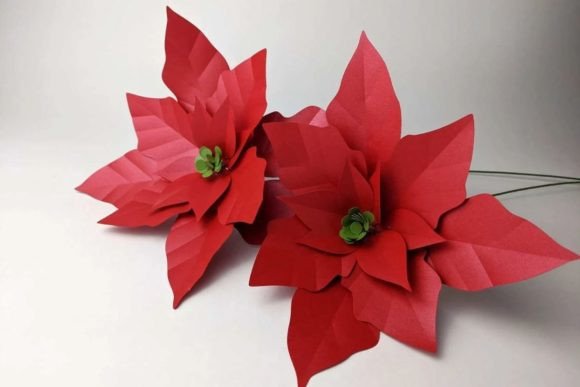
The concept behind the template created by SunflowerSummerCo is rooted in accessibility and realism. Unlike older paper flower patterns that resulted in stiff, cartoonish approximations, modern design techniques allow for layers and textures that mimic nature. When you bring the beauty of poinsettias into your home with this easy-to-use paper flower template, you are essentially freezing a moment of perfect bloom. The result is a decorative element that looks as though it was handpicked from nature itself, yet it requires zero maintenance beyond occasional dusting.
Why Permanent Botanicals Matter for Modern Spaces
For professionals, entrepreneurs, and small business owners, the environment in which you work or host clients speaks volumes before a word is spoken. A drooping plant on a reception desk or a dining table can subconsciously signal neglect. Conversely, a crisp, vibrant arrangement suggests attention to detail and stability. A Poinsettia Paper Flower arrangement provides this consistency. Whether you are looking to add a pop of color to your living room or want to make a pretty arrangement for your dining table, this template ensures the presentation remains flawless indefinitely.
Consider the cost-benefit analysis for event planners or marketers who frequently style spaces for photoshoots or open houses. Purchasing fresh floral arrangements for every event is expensive and logistically challenging, especially during peak seasons when demand drives up prices. By investing time once in creating high-quality paper botanicals, you create a reusable asset. The finished product is cute and realistic, capable of elevating a space without the recurring cost or the waste associated with discarded organic matter. This approach aligns well with sustainable practices, reducing the carbon footprint associated with shipping cut flowers across continents.
Accessibility and the Elimination of Skill Barriers
One of the most significant hurdles to entering the world of paper crafts is the perceived need for artistic talent. Many assume that creating something "realistic" requires years of practice in sculpting or painting. However, the best part is that anyone can do it – no special skills required. The genius of this specific template lies in its engineering. It breaks down the complex anatomy of a poinsettia into manageable, interlocking pieces that naturally curl and layer to create depth.
This democratization of craft is particularly valuable for educators and parents looking for meaningful activities. It allows for a shared experience where the focus is on assembly and creativity rather than technical drawing ability. The template makes it easy to create realistic-looking paper poinsettias in minutes, turning what could be a frustrating afternoon into a satisfying project. Included, you will find a link to a video tutorial to create the craft, which serves as a vital safety net for visual learners who prefer watching the process before attempting it themselves.
Technical Specifications and Material Choices
The success of any paper flower project hinges heavily on material selection. Using standard printer paper will result in a flimsy product that lacks the structural integrity to hold the signature curl of a poinsettia bract. To achieve the professional look described in the guide, the weight and texture of the stock are paramount. All cardstock featured in the recommended examples is Encore Cardstock 80 lb cover 216 gsm. This specific weight provides the perfect balance: it is heavy enough to hold its shape when curled but pliable enough to be manipulated without cracking.
When sourcing materials, it is crucial to match the GSM (grams per square meter) to the template's design intent. Lighter stocks may require excessive gluing to maintain form, while heavier boards might resist the delicate shaping needed for the inner petals. For those ready to source the correct materials, you can click here to visit 12×12 Cardstock Shop. This is a paid link at no extra cost to you, ensuring you get the exact specifications needed for optimal results without the guesswork.
Versatility in File Formats for Digital Crafters
In an era where digital cutting machines like Cricut and Silhouette have revolutionized home crafting, file compatibility is non-negotiable. A static image file is rarely sufficient for precision cutting. This template addresses the needs of various workflows by providing the file in multiple industry-standard formats:
- PDF: Ideal for those who prefer printing templates directly onto cardstock and cutting by hand with scissors or an X-Acto knife.
- SVG: The gold standard for vector-based cutting machines, allowing for infinite scalability without loss of resolution.
- DXF: A robust alternative format compatible with a wide range of CAD software and older cutting machine models.
This flexibility ensures that whether you are a tech-savvy freelancer with a fully equipped studio or a hobbyist working with basic tools, the Poinsettia Paper Flower project remains accessible. You never have to worry about the flowers dying and never coming back because the digital file remains in your library, ready to be reproduced whenever you need a refresh or an expansion of your decor.
Practical Applications Beyond Holiday Decor
While the poinsettia is synonymous with December, its utility extends far beyond the Christmas tree. Content creators and bloggers often need evergreen content visuals that do not date quickly. A well-lit photo of a paper poinsettia can serve as a winter-themed background for posts ranging from January sales to New Year planning guides. Because the flower does not wilt, you can stage a photoshoot over several days without the lighting or the subject changing unexpectedly.
Furthermore, for those in the education sector, these templates offer a tangible way to teach geometry and botany. Assembling the flower requires understanding symmetry, layering, and the structural biology of the actual plant. It transforms a simple craft into a STEM-adjacent activity. The template is perfect for group settings where the goal is collaborative creation rather than solitary perfectionism.
Considerations for Best Results
While the process is streamlined, users should be aware that the final outcome is influenced by their technique. The "realistic" look comes from the subtle variance in how each petal is curled. It is recommended to experiment with different curling tools—such as quilling tools, pencils, or even the edge of a ruler—to find the tension that suits your specific cardstock batch. Additionally, while the template is designed for efficiency, rushing the gluing process can lead to misalignment. Taking the time to let adhesive set properly between layers ensures the flower maintains its three-dimensional volume.
Ultimately, adopting the Poinsettia Paper Flower approach is about taking control of your aesthetic environment. It removes the uncertainty of biological variables and replaces it with the reliability of crafted art. With just a few simple steps, you can have a beautiful piece of art for your home that defies the seasons. Whether used to brighten a corporate lobby, enhance a YouTube thumbnail, or simply bring joy to a quiet corner of your house, this template bridges the gap between natural beauty and human ingenuity.