Strategic Design with the Tulip Paper Flower: Elevating Brand Aesthetics and Creative Output
In the landscape of modern branding and interior design, the decision to incorporate physical elements into a visual strategy is often overlooked in favor of digital-only solutions. However, tangible assets possess a unique psychological weight that screens cannot replicate. The Tulip Paper Flower represents more than a simple craft project; it is a versatile tool for professionals seeking to enhance their environment, refine their brand storytelling, or develop high-quality visual content without the logistical burdens of fresh flora. By leveraging a precision-engineered template created by SunflowerSummerCo, creators can integrate realistic botanical elements into their workflows with efficiency and intentionality.
The strategic value of using paper florals lies in their permanence and controllability. Unlike organic tulips, which have a limited lifespan and require specific environmental conditions to maintain their aesthetic appeal, a paper counterpart offers a consistent visual asset. For marketers planning a long-term photoshoot, educators designing a classroom environment, or small business owners curating a retail space, the ability to guarantee that a prop will look identical today, next month, or next year is a significant operational advantage. This consistency supports brand cohesion, ensuring that the visual language remains stable across various campaigns and seasons.
Operational Efficiency and Resource Management
Time is a non-renewable resource for entrepreneurs and freelancers. The traditional route of sourcing fresh flowers involves travel, selection, arrangement, and ongoing maintenance, followed inevitably by disposal and replacement. This cycle consumes budget and attention that could be directed toward core business activities. The Tulip Paper Flower template disrupts this cycle by offering a "create once, use indefinitely" model. With just a few simple steps, users can produce a beautiful piece of art that mimics nature, eliminating the recurring cost and effort associated with perishable decor.
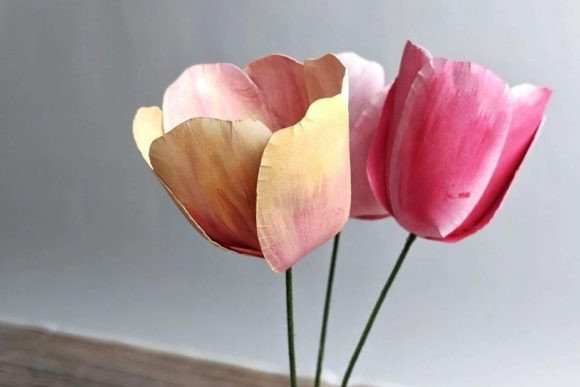
Furthermore, the accessibility of this tool democratizes high-end design. You do not need to be a professional florist or possess specialized artistic skills to achieve a realistic result. The template is designed for immediate utility, allowing anyone to generate professional-grade props. This lowers the barrier to entry for small businesses that need to elevate their physical presence or content creation capabilities without hiring external designers. The finished product is cute and realistic, capable of brightening up any space, whether you are adding a pop of color to a living room for a lifestyle blog or arranging a sophisticated centerpiece for a dining table event.
Technical Specifications and Material Integrity
To achieve a result that truly rivals nature, the quality of materials and the precision of the cut are paramount. The SunflowerSummerCo template addresses this by providing files in multiple formats—PDF, SVG, and DXF—ensuring compatibility with a wide range of cutting machines and printers. This flexibility allows users to choose the workflow that best fits their existing equipment, whether they are using a desktop printer and scissors or a professional-grade electronic cutter.
Critical to the structural integrity and visual fidelity of the flower is the choice of cardstock. The recommended medium is Encore Cardstock 80 lb cover (216 gsm). This specific weight is not arbitrary; it provides the necessary stiffness to hold the curl of the petals while remaining pliable enough for shaping. Using paper that is too thin results in a flimsy appearance that fails to convince the eye, while paper that is too thick may resist shaping and look artificial. Adhering to this specification ensures the final output maintains the delicate yet durable characteristics of a real tulip. For those seeking the exact material to match the designer's intent, you can visit the 12×12 Cardstock Shop (this is a paid link at no extra cost to you) to source the correct supplies.
Strategic Applications Across Industries
The utility of the Tulip Paper Flower extends far beyond home decoration. When approached with a strategic mindset, these paper creations become powerful assets in various professional contexts:
- Content Creation and Photography: Bloggers and social media managers often struggle with finding fresh, vibrant backgrounds that do not distract from the main subject. Paper tulips offer a controlled variable. They can be arranged to frame a product shot perfectly, providing color and texture without the risk of wilting during a long editing session. The ability to swap colors instantly by changing the cardstock allows for rapid A/B testing of visual themes.
- Retail and Event Branding: Small business owners can use these flowers to create immersive window displays or event backdrops. Because they are lightweight and durable, they are easier to transport and install than heavy floral arrangements. They can be scaled up or down to fit specific spatial constraints, offering a customizable solution for pop-up shops or trade show booths.
- Educational Environments: Educators can utilize the template as a teaching tool for geometry, biology, or art history. The process of assembling the flower reinforces fine motor skills and following technical instructions. Additionally, the resulting decorations create a warm, inviting atmosphere in classrooms that persists throughout the academic year without maintenance.
- Product Packaging and Unboxing Experiences: E-commerce brands looking to enhance their customer experience can include a single, hand-assembled paper tulip in their shipping boxes. This small touch adds a layer of personalization and perceived value, turning a standard transaction into a memorable brand interaction.
Risk Mitigation and Intentional Implementation
While the benefits are clear, deploying physical props without a clear strategy can lead to clutter or brand dilution. A common pitfall is the random accumulation of crafts that do not align with the overall aesthetic or message. To avoid this, one must define the objective before cutting the first sheet of paper. Ask yourself: What emotion am I trying to evoke? Does the color palette of the tulip support my brand guidelines? Is this element serving a functional purpose or merely filling space?
Using the Tulip Paper Flower without context can result in a disjointed visual identity. For instance, placing hyper-realistic paper flowers in a minimalist, industrial-tech setting might create cognitive dissonance unless deliberately used as a contrasting statement piece. Therefore, planning is essential. Consider the lighting of your space, as paper interacts with light differently than organic matter. The matte finish of 80 lb cardstock absorbs light softly, which can be advantageous for reducing glare in photography but may require additional lighting in dim rooms to ensure the details are visible.
Executing the Vision: From File to Finished Product
The transition from a digital file to a physical asset should be seamless. The inclusion of a video tutorial link with the template bridges the gap between instruction and execution, catering to different learning styles. Visual learners can follow the movements, while textual thinkers can refer to the step-by-step logic. This dual approach ensures that the time investment is minimized and the success rate is maximized.
When approaching the assembly, treat it as a micro-production line if you require volume. Cut all petals first, then score all fold lines, and finally assemble. This batch-processing method, common in manufacturing, increases productivity and ensures uniformity across multiple flowers. It is a practical example of how a simple craft can adopt professional operational principles to yield better results.
Ultimately, the decision to use a Tulip Paper Flower template is a decision to prioritize longevity, consistency, and creative control. It allows professionals to bring the beauty of tulips into their homes and workplaces without the anxiety of decay. By understanding the material requirements, recognizing the diverse applications, and applying a thoughtful framework to their use, creators can turn a simple PDF download into a sustainable component of their broader strategic vision. Whether for a one-time project or an ongoing branding element, this tool empowers users to craft their environment with precision and purpose.