Creating Personalized Nursery Art: A Practical Guide to Baby Paper Sculpture SVG Projects
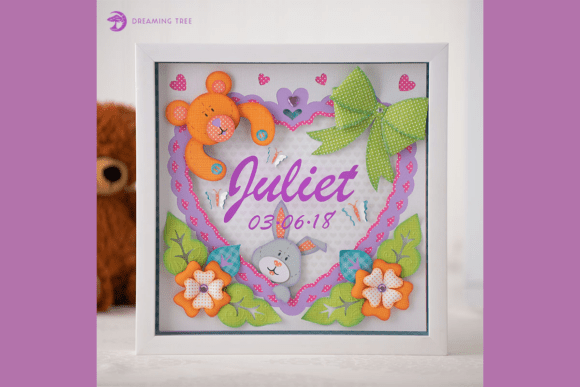
For parents, grandparents, and craft enthusiasts looking to create meaningful decor for a new arrival, the Baby Paper Sculpture SVG offers a distinct approach to personalized gifting. Unlike standard printed wall art or mass-produced nursery items, this format provides the digital blueprint for a three-dimensional, layered paper creation. Typically featuring whimsical elements like teddy bears, bunnies, florals, and bows, these designs allow the maker to customize names and dates, resulting in a unique keepsake. However, before committing to this specific crafting method, it is essential to understand how it compares to other decorative options, what resources are required, and whether it aligns with your current skill level and available tools.
Understanding the Format: Digital Files vs. Physical Kits
When exploring options for nursery decor, consumers generally encounter two primary categories: pre-made physical kits and digital design files. The Baby Paper Sculpture SVG falls squarely into the latter category. Purchasing an SVG (Scalable Vector Graphics) file means you are buying the intellectual property and the cutting instructions, not the physical materials or a pre-cut set of pieces.
This distinction is crucial for decision-making. If you prefer a "ready-to-assemble" experience where all cardstock and components are included in a box, a physical kit may be a more suitable alternative. Conversely, if you already possess a stock of cardstock, enjoy selecting specific color palettes, or own a cutting machine, the SVG route offers greater flexibility and often a lower cost per project. The Baby Paper Sculpture SVG typically arrives as a digital download containing the vector file and a PDF legend. This legend is vital, as it acts as a map to identify which layer corresponds to which color, a step that is unnecessary in pre-sorted kits but essential for self-sourced projects.
Compatibility and Technical Requirements
To utilize a Baby Paper Sculpture SVG effectively, specific hardware and software are required. These files are designed for use with SVG-ready cutting machines, such as those from Cricut or Silhouette, and are optimized for standard 12″×12″ cutting mats. While the design can technically be resized to suit different frame sizes, users should note that scaling significantly smaller may compromise the structural integrity of the small tabs and folds necessary for 3D assembly. Similarly, enlarging the design beyond the capacity of a standard mat requires tiling strategies that can complicate the cutting process.
For those without access to electronic cutting machines, this format presents a limitation. While it is theoretically possible to print the SVG as a template and cut by hand, the precision required for intricate layers, especially for elements like fine floral details or small text, makes manual cutting impractical for most hobbyists. In such cases, alternatives like printable watercolor illustrations or vinyl decals might offer a similar aesthetic with fewer technical barriers.
Evaluating the Aesthetic: 3D Depth vs. Flat Design
The primary selling point of the Baby Paper Sculpture SVG is its dimensionality. Traditional nursery art often relies on flat prints, canvas paintings, or vinyl lettering applied directly to a wall. While these options are effective, they lack the tactile quality of paper sculpture. By layering cut cardstock—often using foam adhesive squares between layers—crafters create shadows and depth that change depending on the lighting in the room. This makes the final piece particularly well-suited for shadow box displays, where the enclosed space enhances the 3D effect.
However, this depth comes with tradeoffs. A flat print is dust-resistant and easy to clean with a simple wipe. A paper sculpture, with its nooks, crannies, and layered edges, can accumulate dust more readily and requires more careful maintenance. Furthermore, the 3D nature means the artwork cannot be framed under standard thin glass; it requires a deep-frame shadow box or a spacer system to prevent the glass from crushing the delicate paper elements. When budgeting for this project, one must factor in the cost of a suitable deep frame, which is often higher than that of a standard picture frame.
Material Considerations and Color Customization
One of the significant advantages of choosing a Baby Paper Sculpture SVG is the ability to control the material quality and color scheme. A typical supply list for a project of this nature—such as one measuring approximately 11.4″ H x 11.4″ W—might include specific weights and textures of cardstock. For example, a designer might recommend:
- 1 Sheet of 12×12 Lavender Cardstock for the base layers.
- 1 Sheet of 8.5×11 Black Cardstock for high-contrast outlines or text.
- 1 Sheet of 8.5×11 White Cardstock for highlights.
- 1 Sheet of 8.5×11 Stone Cardstock for neutral tones.
- 2 Sheets of 12×12 Teal Gingham Pattern Paper for visual interest.
- 1 Sheet of 12×12 Hearts Pattern Paper for thematic accents.
- 1 Sheet of 12×12 Gemstone Pearl Paper for a touch of shimmer.
- 1 Sheet of 12×12 Pink Dotted Pattern Paper for playful details.
This level of customization allows the creator to match the nursery's exact paint colors or theme, something impossible with pre-printed art. However, it also places the burden of sourcing these materials on the crafter. Finding specific patterned papers, such as "Gemstone Pearl" or specific gingham prints, may require visiting multiple craft stores or ordering online, potentially delaying the project completion compared to buying an all-in-one kit.
Time Investment and Skill Level
Prospective makers should realistically assess the time commitment involved. Creating a piece from a Baby Paper Sculpture SVG is not an instantaneous task. The process involves file preparation, machine cutting time, sorting numerous small pieces (often dozens of individual layers), and the meticulous assembly of each element. The inclusion of a step-by-step video tutorial by the designer is a critical resource that can significantly reduce frustration, guiding the user through complex folding techniques and adhesion points.
Compared to other DIY nursery projects, such as painting a wooden sign or applying a vinyl decal, paper sculpture demands higher fine motor skills and patience. It is an excellent choice for individuals who enjoy the process of crafting as much as the final result. For those seeking a quick weekend project or who have limited dexterity, simpler alternatives like pre-framed prints or iron-on transfers may provide a more satisfying experience with less stress.
Best-Fit Scenarios and Limitations
The Baby Paper Sculpture SVG is ideally suited for specific scenarios. It shines as a heartfelt gift for baby showers where the giver wants to offer something handmade and personalized with the baby's name and birth date. It is also perfect for crafters who already own cutting machines and have leftover cardstock they wish to utilize creatively. The ability to resize the design allows it to fit various spaces, from a small shelf display to a large wall feature, provided the resolution holds up during scaling.
Conversely, this option may not be the right choice for everyone. If the goal is to decorate a large room quickly, producing multiple sculptures via SVG would be time-prohibitive compared to buying a set of posters. Additionally, if the intended location is a high-humidity area like a bathroom adjacent to a nursery, paper art may warp over time, making moisture-resistant materials like acrylic or metal wall art a more durable alternative.
Making the Final Decision
Ultimately, choosing to work with a Baby Paper Sculpture SVG depends on balancing the desire for customization against the willingness to invest time and effort. It offers a middle ground between the generic nature of store-bought decor and the total creative freedom of designing from scratch. By providing a structured yet flexible framework, these files empower crafters to produce professional-looking 3D art without needing advanced illustration skills.
Before downloading, consider your inventory of supplies, the availability of a compatible cutting machine, and the amount of time you can dedicate to assembly. If you value the tactile beauty of layered paper and enjoy the meditative process of building a scene piece by piece, this format provides a rewarding pathway to creating a treasured heirloom. If convenience and speed are your primary drivers, exploring pre-assembled kits or flat-print alternatives may better serve your needs. Regardless of the path chosen, understanding these distinctions ensures that the final addition to the nursery is both beautiful and appropriate for your specific situation.