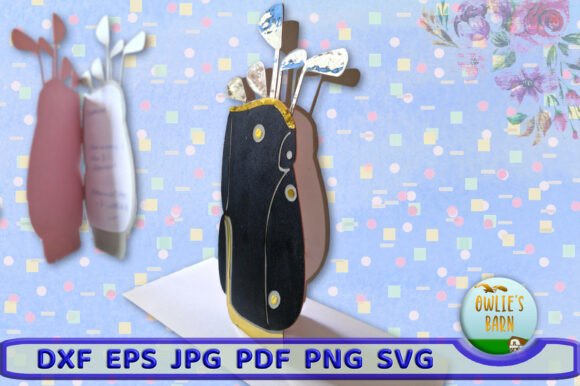
Crafting Memories: The Ultimate Guide to Digital Golf Bag Shaped Cards
In the evolving world of paper crafts and personalized stationery, the shift from physical templates to digital downloads has revolutionized how we celebrate special occasions. Whether you are a seasoned crafter with a high-end cutting machine or a hobbyist who prefers the tactile feel of hand-cutting, digital designs offer unparalleled flexibility. One such design that has captured the hearts of sports enthusiasts and crafters alike is the Golf Bag Card. This unique project allows you to create a three-dimensional celebration piece shaped exactly like a golf bag, complete with clubs peeking out from the top.
This article serves as a comprehensive guide to understanding, utilizing, and appreciating this specific type of digital product. We will explore what makes these files so versatile, how they fit into modern crafting workflows, and why they are the perfect solution for birthdays, Father's Day, or any occasion honoring a golf lover.
Understanding the Digital Product Ecosystem
Before diving into the specifics of the golf bag design, it is essential to understand the nature of the product itself. When you purchase a design like this, you are acquiring a digital asset, not a physical item. There is no shipping wait time; instead, you receive immediate access to a downloadable ZIP folder. This folder is the key to your creative project, containing all the necessary components to bring the card to life.
The significance of this digital format lies in its adaptability. Unlike a pre-printed card bought at a store, a digital template empowers the creator. You have full control over the paper type, the color scheme, and the final size. The design mentioned here measures approximately 20cm high by default, which is a substantial statement piece. However, because the files are vector-based or high-resolution raster images, they can be easily resized up or down to suit your specific needs without losing quality.
The Power of File Formats
A common point of confusion for beginners is the array of file formats included in these downloads. A robust digital product, such as this golf bag card, typically includes a variety of formats to ensure compatibility with different tools and skill levels. Let's break down what you will find inside the sub-folders:
- SVG (Scalable Vector Graphics): The gold standard for electronic cutting machines like Cricut or Silhouette. These files allow for infinite scaling and precise layering.
- DXF: Another vector format often preferred by users of older cutting software or specific CAD programs.
- EPS: Ideal for professional graphic designers using Adobe Illustrator or CorelDRAW.
- PDF: Perfect for those who want to print the template directly from a home printer and cut it out by hand. It ensures the dimensions remain accurate.
- PNG (Transparent): Useful for digital planning, sublimation projects, or inserting the design into other digital compositions.
- JPG: A standard image format often used for previewing the assembly instructions or the final look of the product.
By providing this diverse range of formats, the designer ensures that whether you are a tech-savvy maker or a traditionalist, you have the right tool for the job.
Versions and Versatility: Score Lines vs. Perforations
One of the most thoughtful features of high-quality card templates is the inclusion of multiple versions to suit different finishing techniques. This golf bag design comes in two distinct variations within the download:
- The Score Line Version: This version includes lines specifically designed for scoring tools. If you are using a cutting machine that supports a scoring wheel or stylus, this file will instruct the machine to press into the paper without cutting all the way through. This creates a crisp, professional fold line, essential for the 3D structure of the golf bag.
- The Perforation Version: For crafters who may not have a scoring tool, or for those cutting by hand, this version uses dashed cut lines. These perforations make it incredibly easy to fold the paper accurately after cutting, ensuring the card stands up correctly.
Understanding the difference between these two is crucial for the success of your project. Using the correct version for your equipment prevents frustration and ensures the final product looks polished. The inclusion of both demonstrates a commitment to user experience, acknowledging that every crafter's toolkit is different.
Assembly and Instructions
Creating a 3D SVG or shaped card can seem daunting if you have never attempted one before. How do the flat pieces become a standing golf bag? This is where the included assembly instructions become invaluable. Provided in both JPG and PDF formats, these guides walk you through the process step-by-step.
Typically, the process involves cutting the main body of the bag, attaching the pockets, and securing the clubs. The design often includes an envelope template that fits the card perfectly. This is a critical detail; a custom-shaped card requires a custom envelope to protect it during delivery or storage. The instructions will clarify how to fold and glue the envelope so that the 20cm card slides in smoothly.
Pro Tip for Machine Users: If you are sending this design to a cutting machine, remember a vital technical step: attach layers before cutting. In software like Cricut Design Space, failing to "weld" or "attach" the score lines to the cut lines can result in the machine cutting the score marks as actual cuts, ruining the folding capability of the card. Always double-check your layer panel before hitting "Make."
The Significance of Personalized Stationery in Modern Life
Why go through the effort of downloading, cutting, and assembling a card when a generic one is available at any grocery store? The answer lies in the emotional value of personalization. In an era dominated by digital communication and mass-produced goods, a handmade or semi-handmade card carries a weight of thoughtfulness that store-bought items cannot match.
Consider the recipient: a golfer who spends their weekends on the green. A card shaped like their favorite equipment speaks directly to their passion. It shows that the sender took the time to select a design that resonates with the recipient's hobbies. Whether it is for a Father's Day tribute, a Birthday celebration, or a Name Day, the specificity of the golf bag shape transforms a simple greeting into a cherished keepsake.
Educational and Creative Benefits
Beyond the sentimental value, engaging with these digital templates offers educational benefits. For students or children interested in STEM (Science, Technology, Engineering, and Mathematics), assembling a 3D card is a practical lesson in geometry and spatial reasoning. They learn how 2D shapes translate into 3D structures, understanding concepts like tabs, folds, and structural integrity.
For adults, it serves as a creative outlet—a form of mindfulness. The process of selecting paper, aligning the cut, and carefully assembling the layers encourages focus and patience. It bridges the gap between technology and traditional craft, allowing users to leverage modern software to create something tangible and beautiful.
Common Misunderstandings and Clarifications
As with any digital product, there are occasional misconceptions that new buyers might encounter. Clarifying these upfront ensures a smoother experience:
- "Is this a physical card?" No. As stated clearly in the product description, this is a digital product only. You must have access to a printer, cutting machine, or scissors to realize the final object.
- "Can I resize it to be huge?" While vector files (SVG, EPS, DXF) can technically be scaled infinitely, practical limitations exist based on your cutting mat size and printer paper limits. The 20cm height is optimized for standard cardstock, but resizing is possible if your equipment allows.
- "Do I need expensive software?" Not necessarily. Many cutting machines come with free proprietary software that handles SVG and DXF files perfectly. PDFs can be opened with any standard web browser or free reader.
Conclusion: Elevating Your Celebrations
The Golf Bag Card template represents the best of modern crafting: convenience, customization, and creativity. By offering a comprehensive suite of file formats, clear assembly instructions, and thoughtful design variations like score lines and perforations, this digital product caters to a wide audience. From the beginner looking to try their first shaped card to the experienced designer seeking a reliable base for a client project, this design delivers.
Incorporating such elements into your celebrations adds a layer of personal touch that strengthens relationships. It turns a routine "Happy Birthday" into a memorable interaction centered around shared interests. So, whether you are firing up your cutting machine or picking up a pair of precision scissors, this digital design invites you to step onto the fairway of creativity and craft something truly exceptional.
Remember, the joy of crafting lies not just in the finished product, but in the process of creation. With the right tools and a little bit of guidance, anyone can master the art of the shaped card and deliver a message that stands out—literally and figuratively.